
Our Instruments
Our Organ
The organ at St. Stephen’s was built and installed by Bond Organ Builders in 1994 and remains their largest installation to date. It’s a mechanical action instrument, designed in the style of 19th-century French organs, particularly those built by Aristide Cavaillé-Coll. Our organ was featured in the Organ Historical Society 2008 National Convention. Read more about the history of our organ on our history page.
Stoplist
Grand Orgue
16’ Bourdon
8’ Montre
8’ Bourdon
8’ Salcional
8’ Flute Harmonique
4’ Prestant
4’ Flute Ouverte
2’ Doublette
Fourniture IV
Cornet V (mounted)
8’ Trompette
8’ Cromorne
4’ Clairon
Recit / Grand Orgue
Recit Expressiv
8’ Diapason
8’ Cor de Nuit
8’ Viol de Gambe
8’ Voix Céleste
4’ Prestant
4’ Flute à Fuseau
2-2/3’ Nazard
2’ Quarte de Nazard
1-3/5’ Tierce
Cymbale IV
16’ Basson
8’ Trompette
8’ Hautbois
Tremblant
Pedale
16’ Contrabasse
16’ Soubasse
8’ Montre
8’ Flute
4’ Octave
4’ Flute
Fourniture II
16’ Bombarde
8’ Trompette
4’ Clarion
Tirasse Grand Octave
Tirasse Recit


The Book of Acts Corona
The Book of Acts Corona consists of the 28 panels that surround the pipes of our organ. The Corona’s symbols were computer-designed and laser-carved, reflecting the increasingly sophisticated role of computer technology in design and fabrication at the time. There are two main purposes that the Corona serves at St. Stephen’s:
The first is visual. The Corona unites the otherwise free-standing organ with the architecture of the original building, and draws the eye to the three main elements of our worship space: the Altar, the Ambo (pulpit) and the Baptismal Font. The cut designs allow light to stream through each panel, providing a beautiful illuminated backdrop to our instrument.
The second is spiritual. Each panel features important and meaningful Christian symbols. To learn about each symbol and see it in greater detail, click or tap on the red circles. All images and descriptions are taken from an informational booklet created in 1995 to debut the new organ, with text written by the Rev. A. Scott Miller. Some descriptions have been lightly edited to reflect updated language.
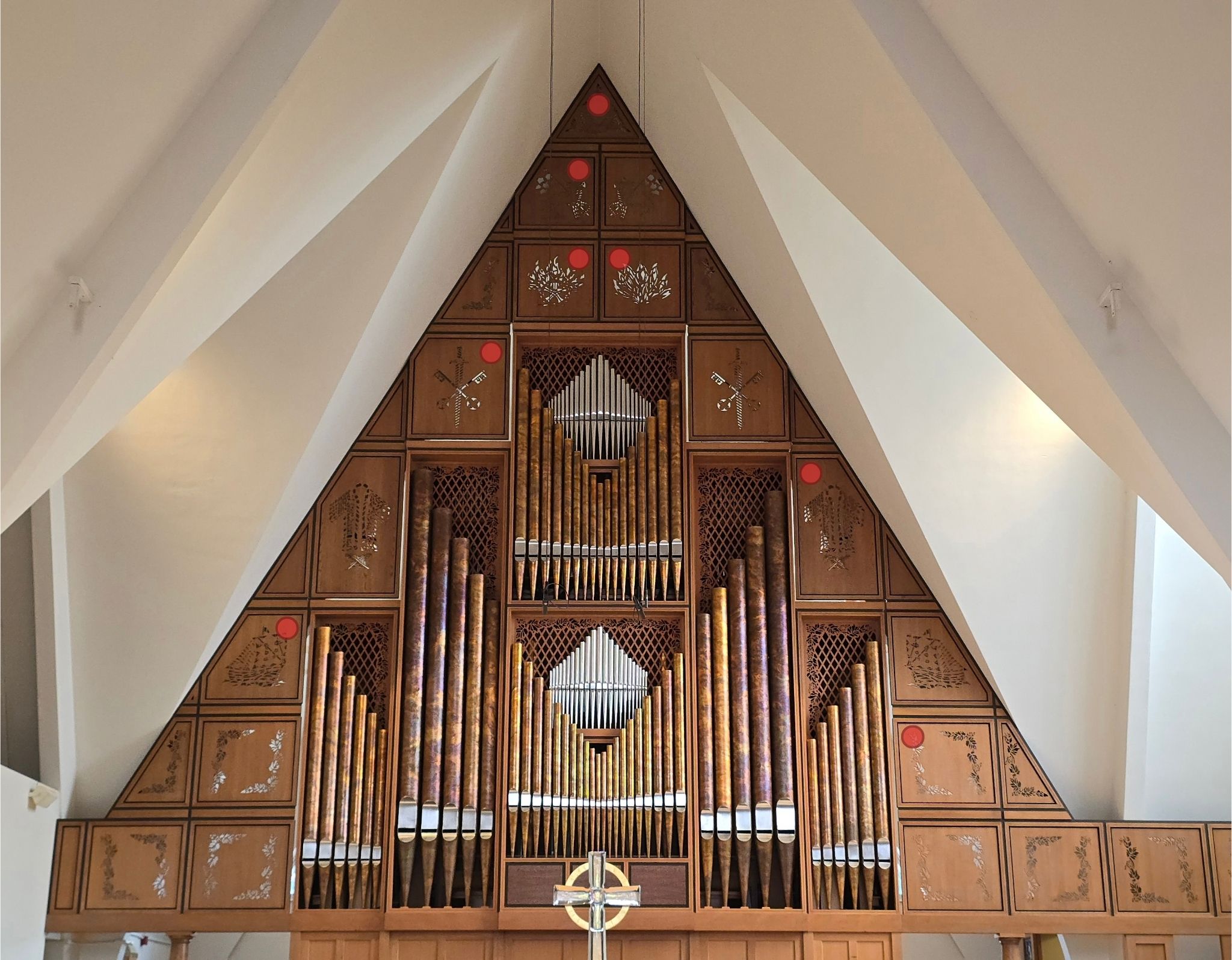
The Trinity (Panel 1)
The three intertwined fish. A single fish is a very ancient symbol for Christ and was used by members of the early Church as a secret sign to reveal their allegiance to Christ. The three fish as we see them here signify the Trinity and the salvation that comes from us from the Triune God. The circle shape represents the eternal nature of the Trinity, both in substance and in relationship. The sizes of the fish signify the equality of the three persons of the Trinity, and the intertwining signifies the unity of the Trinity. The whole symbol has also been used as a baptismal symbol, illustrating that baptism happens in the same name and under the blessing of the Trinity. For this reason, the symbol can also be found adoring the basin of our baptismal font.
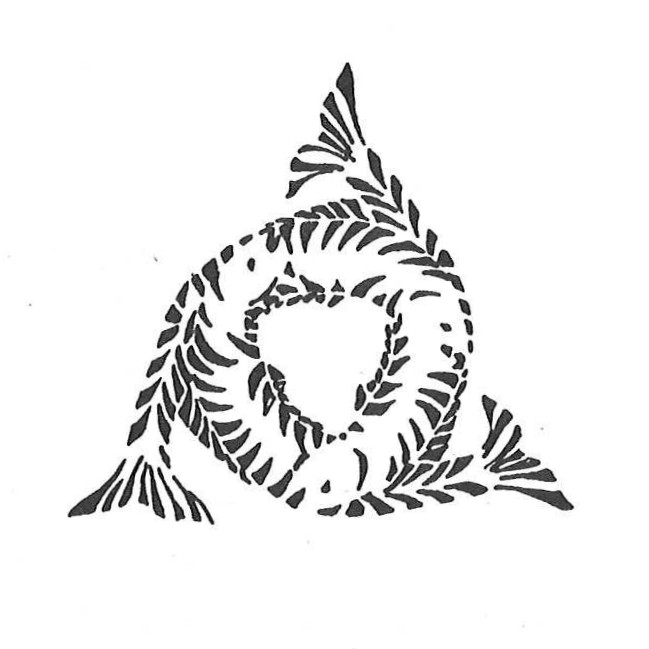
The Lamb (Panels 2 and 3)
In the Old Testament, the lamb is a powerful symbol, because the blood of a sacrificial lamb without blemish was commanded by God to be sprinkled on the doorposts of the Hebrew homes in Egypt, so that God's destroying angel might pass over them and spare the people of Israel. And so in the Old Testament, the lamb is a sign of God's deliverance.
But the symbol we have here is a New Testament symbol, variously called the Lamb of God, the Agnus Dei, or the Victory Lamb. It stands for Christ. Notice that the Lamb is not wounded, but carries a banner signifying the victorious nature of Christ's sacrifice on the cross, his victory over the powers of death. As such are Lamb's symbol signifies the resurrected Christ of all the symbols on the corona. This one for many, communicates the strongest feelings of hope and thanksgiving. That this symbol is also found on the front of our altar.
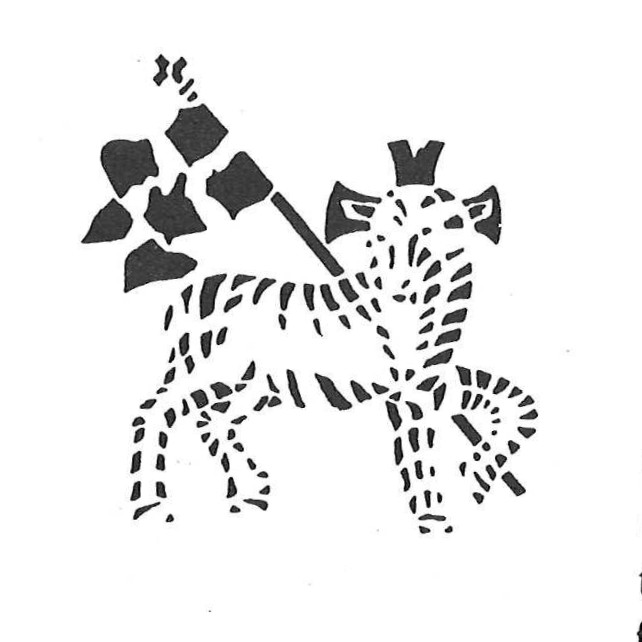
Chariot of Fire (Panel 5)
This symbol was originally an Old Testament symbol for the prophet Elijah, because a chariot of fire appeared when he was carried off to heaven in a whirlwind. The early Christian Church took the same symbol and applied it to the Ascension of Christ into Heaven, an event to which the Book of Acts bears testimony.
Seven-Fold Flame (Panel 6)
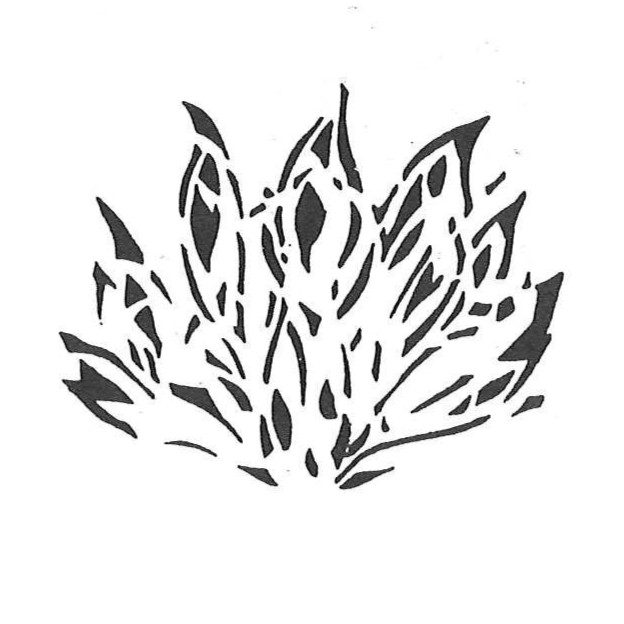
This symbol also predates Christianity. For the Jews, it was a symbol for completeness, as seven is the most sacred and complete of all numbers. In Jewish tradition, the seven-branched menorah still symbolizes God the Creator, as it reflects the seven days of creation.
For Christians, the seven-fold flame represents the Holy Spirit and the event of Pentecost, also reported in the Book of Acts. In addition to this, the Seven-Fold Flame has come to represent the seven gifts of the Spirit (being wisdom, understanding, counsel, strength, knowledge, godliness, and holy fear) and the seven virtues of faith, hope, charity, prudence, justice, temperance, and fortitude.
The Sword and the Cross Keys (Panels 9 and 10)
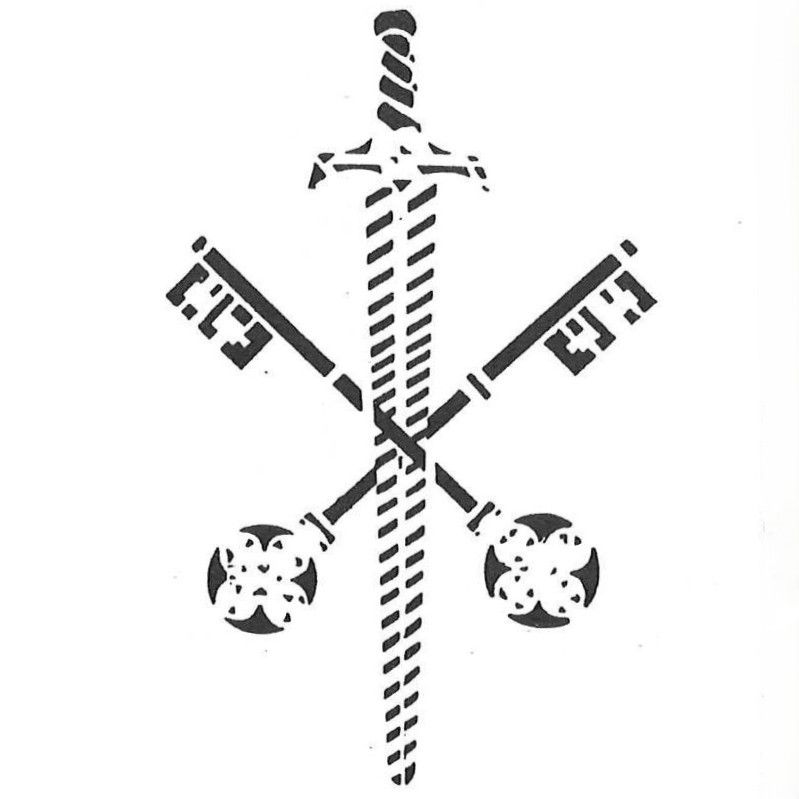
This symbol is a combination of two other symbols, those of the leading personalities of the Book of Acts, Saints Peter and Paul. Paul is symbolized by the sword because he was known in the early church as the "Sword of the Spirit," and also because the Sword was the instrument of his death in Rome. It is believed he was beheaded, a privilege granted to a Roman citizen who was to be executed, as opposed to be crucified, which was reserved for non-citizens like Jesus.
The Keys represent Peter, who by virtue of his confession that Jesus was Christ, was given by Him the gift of the Keys of the Kingdom, along with the power to bind and loose sins on Earth.
The Coat and the Crossed Palms (Panels 13 and 14)
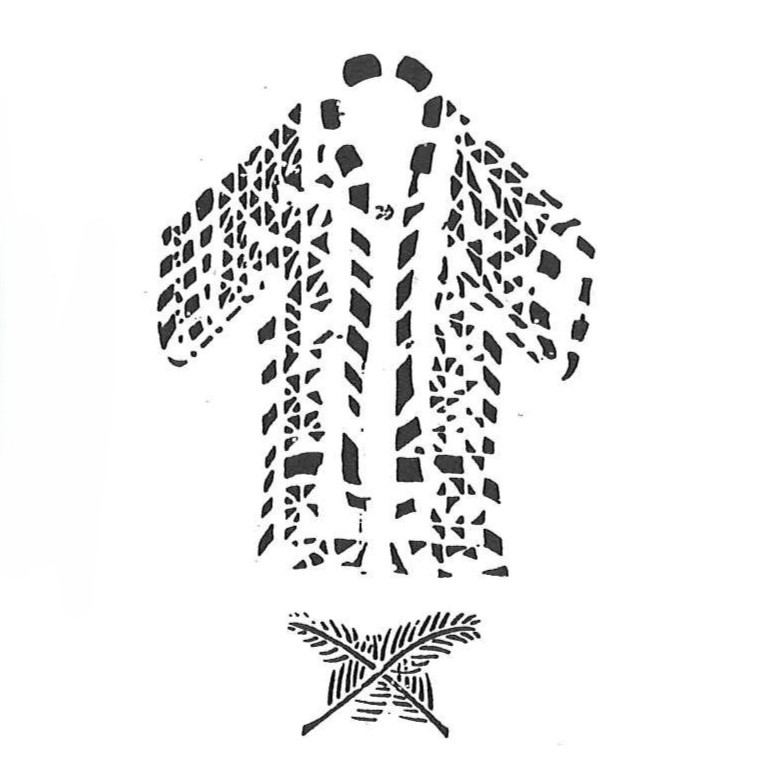
This is the symbol for Stephen. Symbols for St. Stephen often include depictions of three stones, but the craving have includes the Crossed Palms because this symbol represents Martyrs, of which Stephen was the first. The cote is part of Stephen's symbol because witnesses took off their coats and laid them at the feet of Paul, (then Saul) while he watched as Stephen was stoned to death.
The Sailing Ship (Panels 16 and 17)
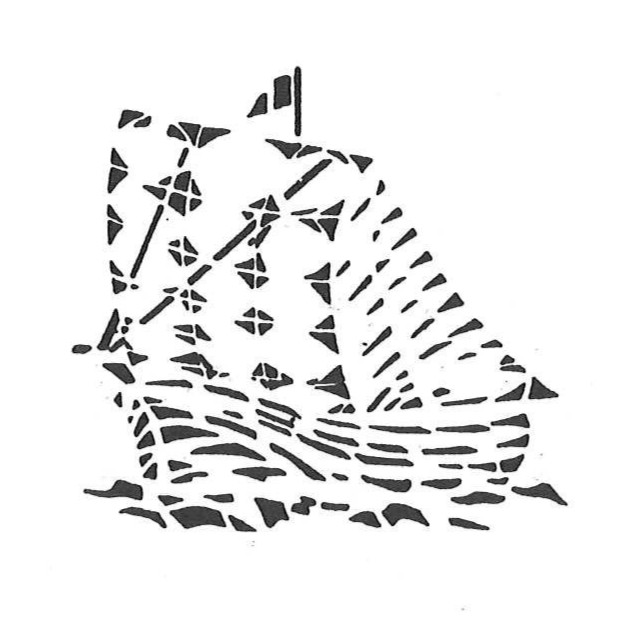
Just as in the Old Testament, Noah's ark became a symbol for refuge and rescue, so for Christians the Sailing Ship has long been a symbol of the Church, as it is also where sanctuary and deliverance are offered to all living creatures. In fact, the sailing ship is so common a symbol of the Church that we call the very place where the faithful gather the "nave", which is the Latin word for "ship." Finally, it has also been called the the "Barque of Peter," the vessel in which Christians are taken to heaven.
The Grape Vine (Panels 18-26)
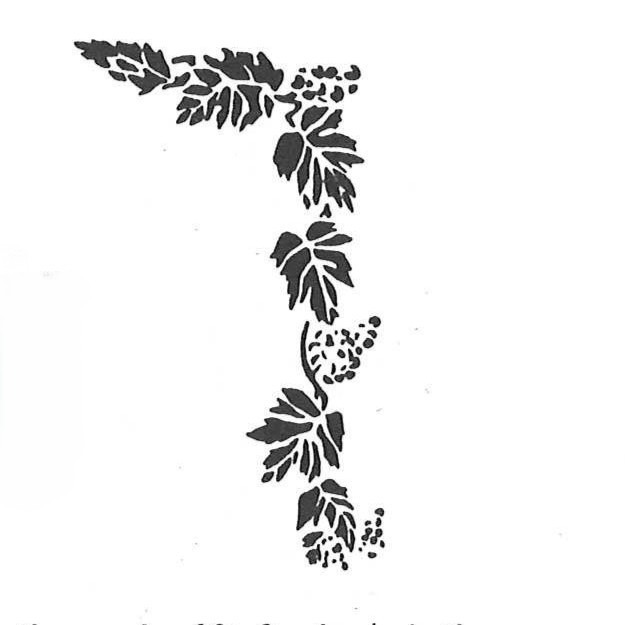
In the Old Testament, this was a symbol for the entry into Canaan, the promised land. Spies sent to Canaan brought back to the Hebrews clusters of grapes as evidence of the bounty and beauty of the place. In the New Testament The design signifies the sacrament of Holy Communion. Wheat, which more properly represents the "Bread of Life" passages of the Gospels, is sometimes used to help represent the Holy Communion, but historically a cluster of grapes is the primary symbol.
Our Sanctuary Piano
St Stephen’s is very lucky to have a special grand piano in its chancel: a Falcone Model 74 from the late 1980s. Designed and built by a small team of craftspeople led by master piano technician Santi Falcone in Haverhill, MA, this was arguably the best piano built in the United States at the time. The St Stephen’s piano is remarkable for its clear, singing tone, deep bass sound and agile keyboard action.
Fewer than 500 Model 61 (6-feet-1-inch long), Model 74 (7’4”), and Model 90 (9-feet) grand pianos left the converted shoe factory before production stopped in 1989 and Falcone sold out to Allstar Capital Corporation. The Falcone name was licensed to a succession of Chinese piano manufacturers whose inexpensive instruments bore no resemblance to the original Falcone designs. The last of these Chinese pianos was made in 2016. The people who took over the Haverhill factory resurrected the Mason & Hamlin brand and its excellent original piano designs from the early 20th century. That factory is still making pianos today.
Santi Falcone, who had started his musical life at the Santa Cecilia Conservatory in Rome, moved a bit further west in Massachusetts and became a chocolatier, opening Dante Confections in North Billerica and online.


Our Chapel Organ
The Chapel organ is a 1972 Gebrs. Vermeulen instrument. It has 9 ranks and 456 pipes.
Stoplist:
MANUAL I COUPLERS (Hitch-down)
8 Roerfluit 56 I / Ped.
4 Prestant 56 I / II
2r Mixtuur [19-22] 112
FOOT LEVERS (labeled; l-r; h-d)
MANUAL II I / Ped.
8 Gedekt [sic] 56 I / II
4 Fluit 56 Tremulant
2 Prestant 56
PEDAL
16 Bourdon 32
4 Koralbas 32


For more information about the St. Stephen’s organ, take a look at our entries on the official Bond Organ Builder’s Inc. website and the Pipe Organ Database. You can also reach out to Minister of Music John Terauds.
Written by Claudia Basile and John Terauds.